AEDs: What They Do and Why Every Minute Matters During Cardiac Arrest
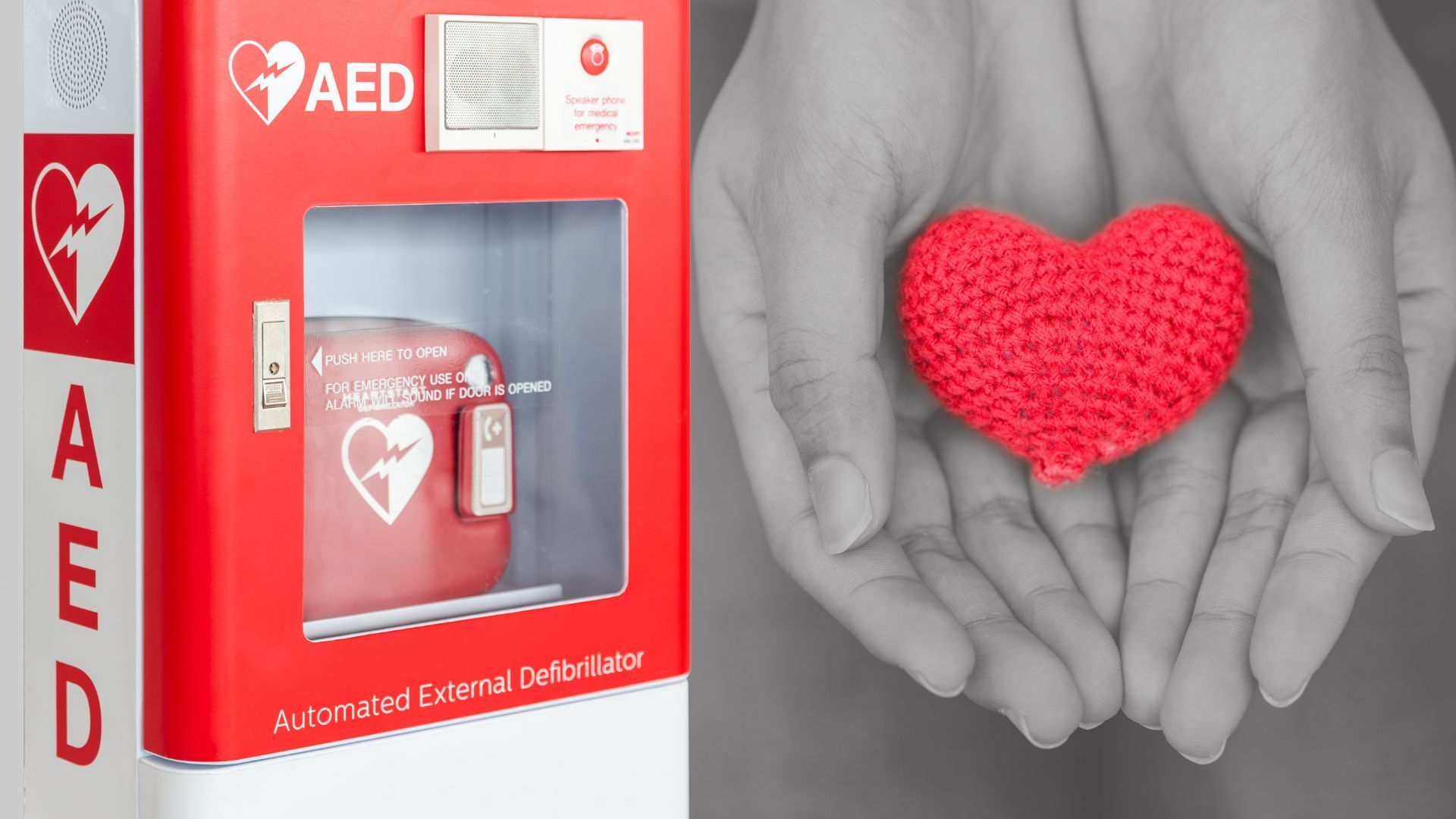
When someone suddenly collapses and is not responding normally, every second matters. You may have seen an Automated External Defibrillator, or AED, mounted on the wall at a gym, workplace, school, restaurant, airport, or community building. But would you know what to do if you actually needed to use one?
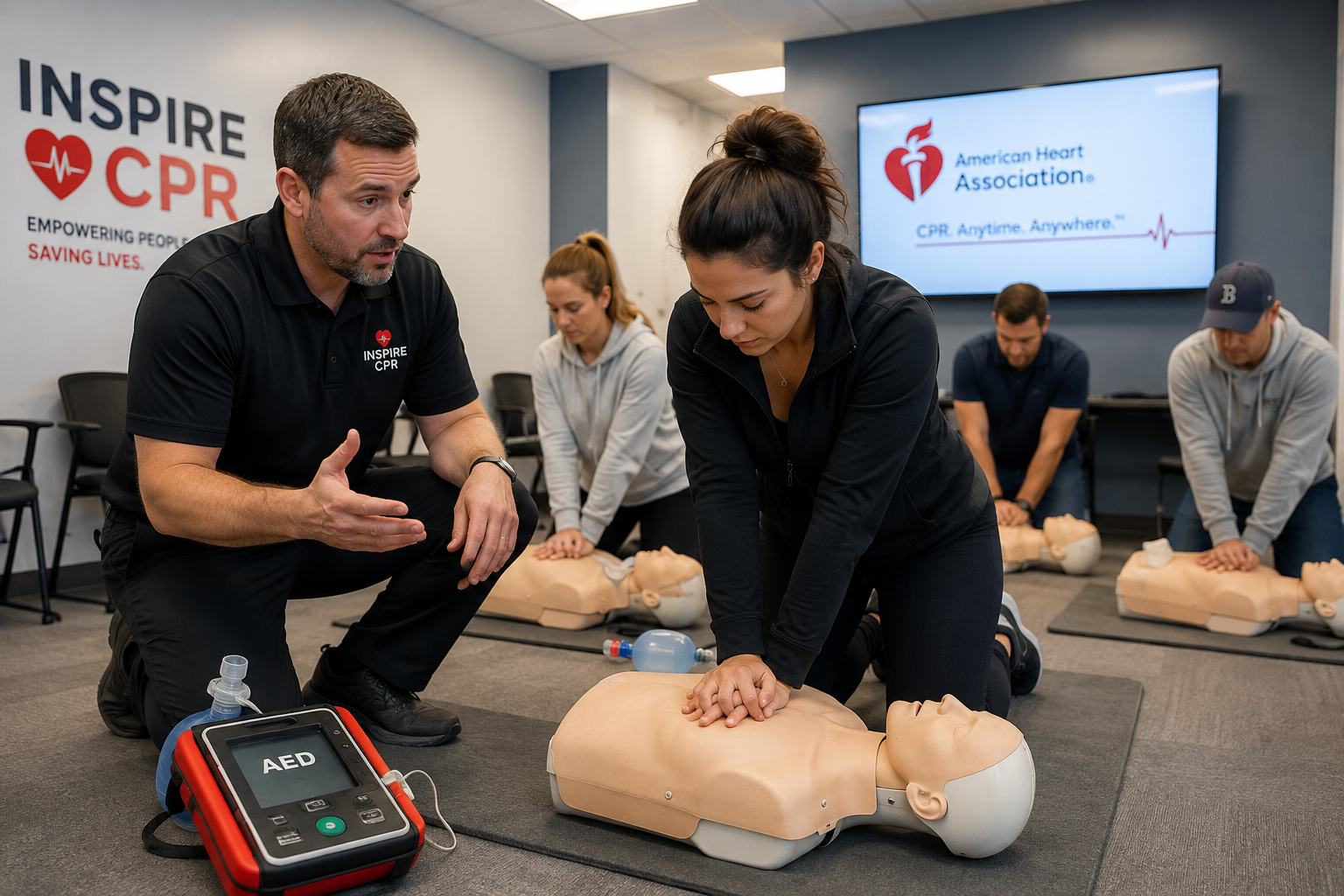
Many people are surprised to learn that AEDs are designed to be used by ordinary people—not just doctors, nurses, or EMTs. At Inspire CPR, our CPR classes in Amesbury, MA include AED training so students can become familiar with this important piece of emergency equipment before they ever need to use one.
What Is an AED?
AED stands for Automated External Defibrillator. An AED is a portable device that analyzes a person's heart rhythm and, when appropriate, delivers an electrical shock to help restore a normal heart rhythm. AEDs are designed to be simple to operate. Once turned on, the device provides voice and visual instructions that guide the rescuer through the process. You don't need to be a cardiologist to understand the basic operation of an AED.
What Happens When You Turn On an AED?
One of the biggest misconceptions about AEDs is that the rescuer has to figure everything out independently. That's not how they're designed. When you turn on an AED, it will begin providing instructions. Depending on the device, it may tell you how to attach the pads, when to stop touching the person, and whether a shock is advised. The AED analyzes the person's heart rhythm and determines whether a shock is appropriate. If a shock is not advised, the AED will not deliver one.
Can an AED Hurt Someone?
AEDs are designed with safety in mind. The device analyzes the heart rhythm before determining whether a shock should be delivered. A rescuer doesn't simply decide when to "push the shock button." The important thing is to follow the AED's instructions carefully and make sure nobody is touching the person when the device tells you to stand clear. This is one of the reasons AED training is such an important part of CPR education.
Why Does an AED Matter During Cardiac Arrest?
CPR helps maintain blood flow to the brain and other vital organs while emergency medical services are on the way. An AED addresses another critical part of cardiac arrest response: certain abnormal heart rhythms. The American Heart Association identifies early CPR and rapid defibrillation as important components of the chain of survival for cardiac arrest. The sooner these interventions occur when appropriate, the better the potential outcome (1).
That is why having an AED nearby—and having people who aren't afraid to use it—can be so important.
You Don't Have to Wait for the Ambulance
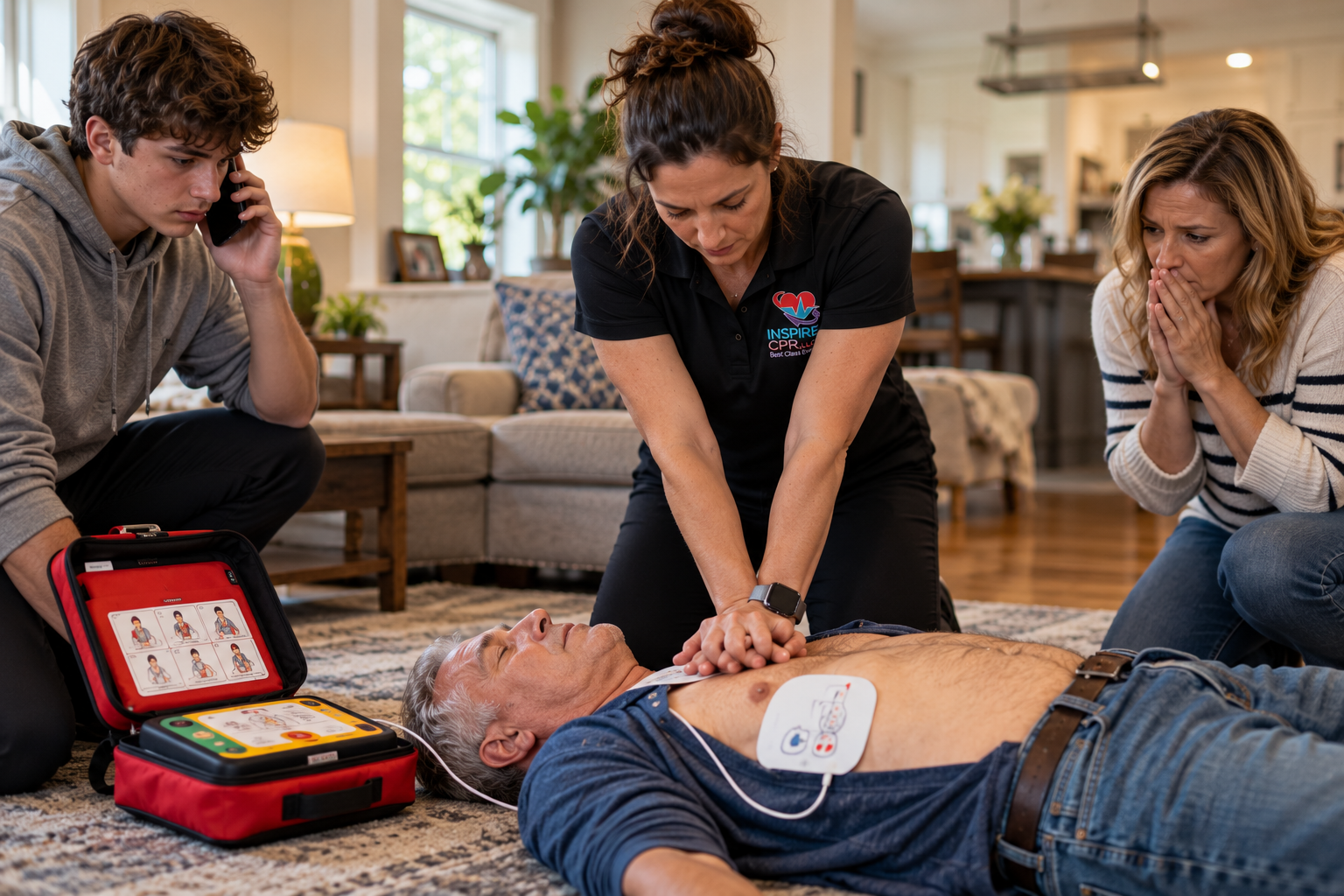
When a person is in cardiac arrest, waiting for professional help to arrive before beginning CPR or using an available AED can mean losing valuable time.
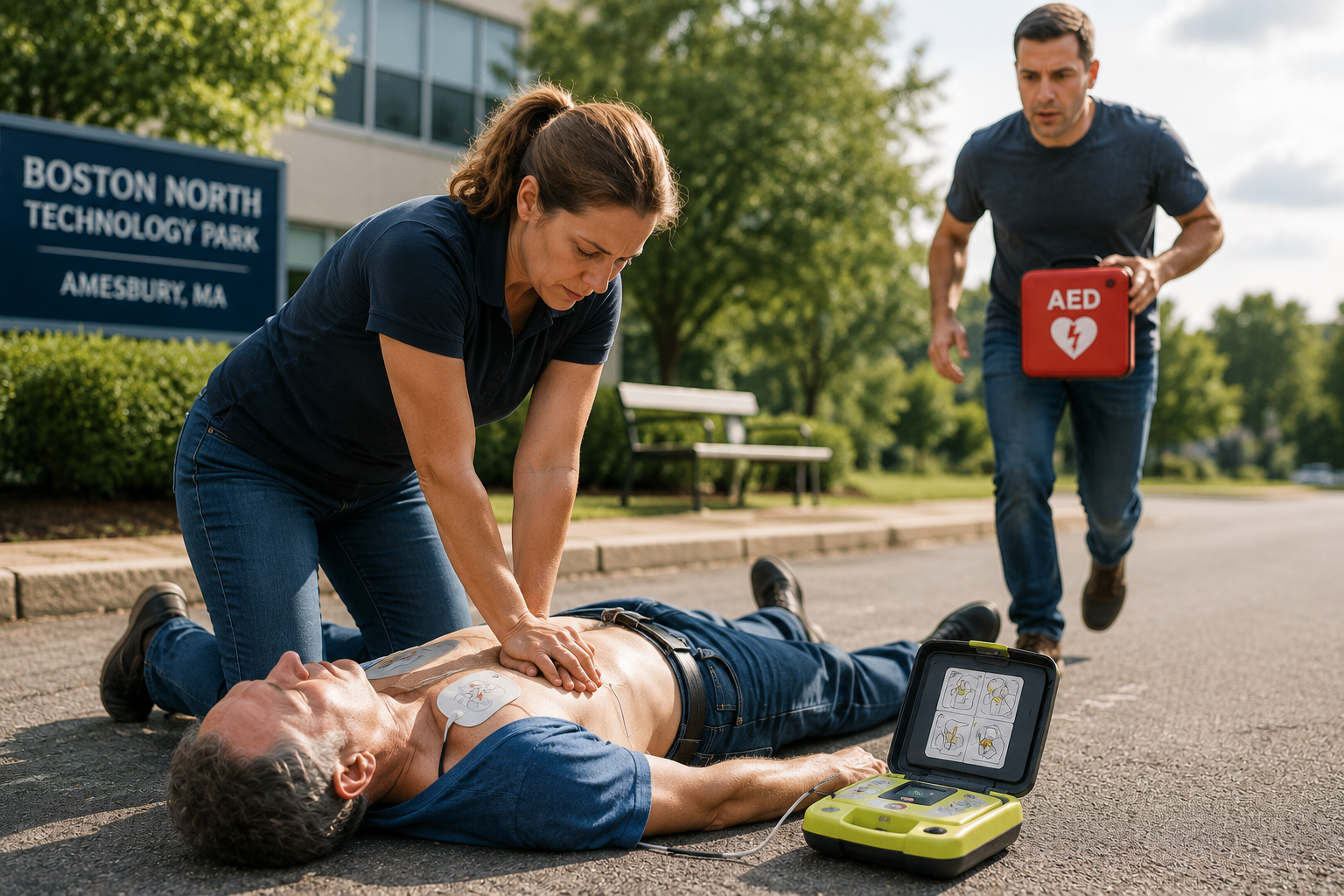
If an AED is available, a trained rescuer can retrieve it while another person begins CPR. The AED can then be turned on and used according to its instructions. Professional emergency responders should still be contacted immediately. CPR and AED use are intended to provide immediate assistance while emergency medical services are responding.
AED Training Builds Confidence
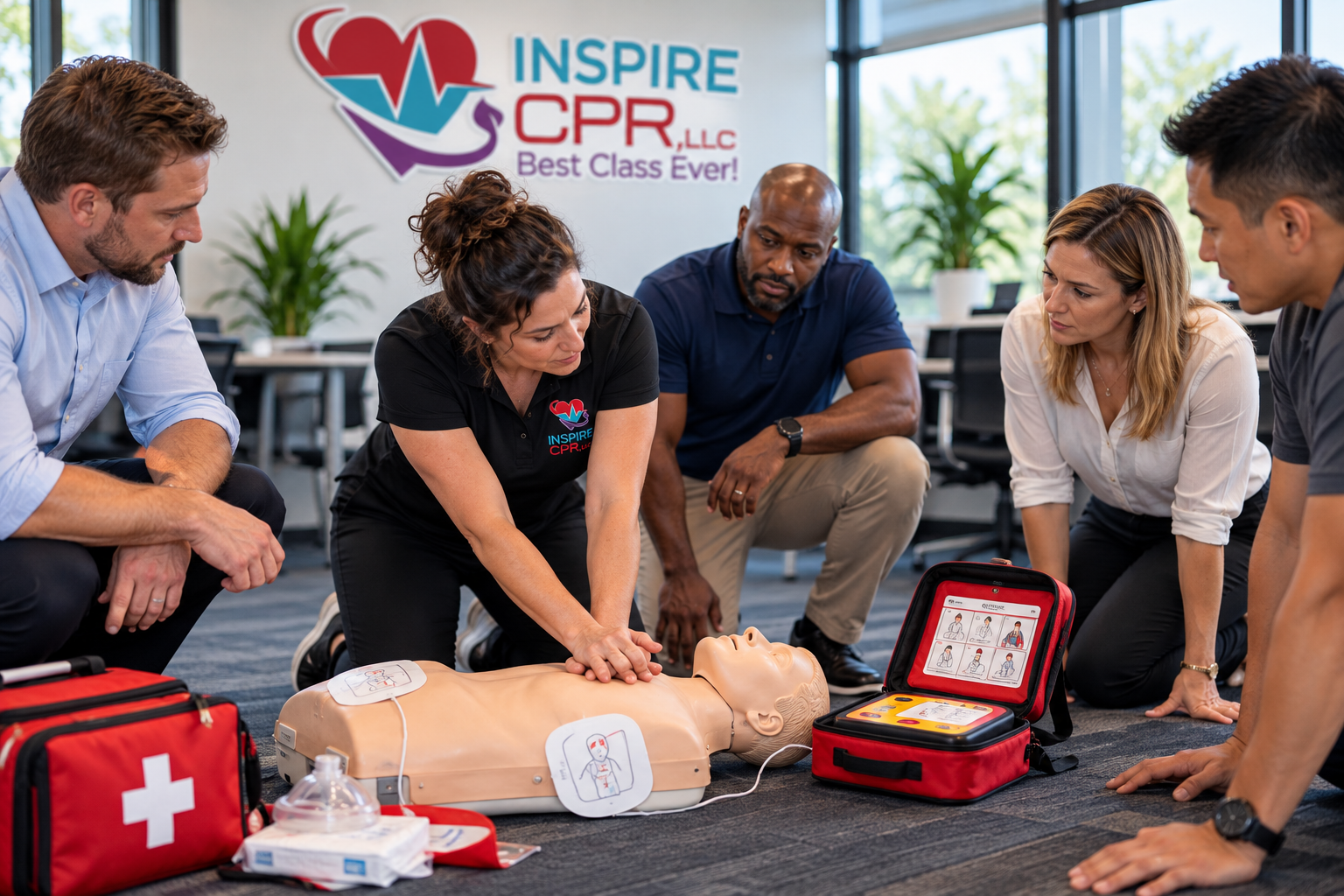
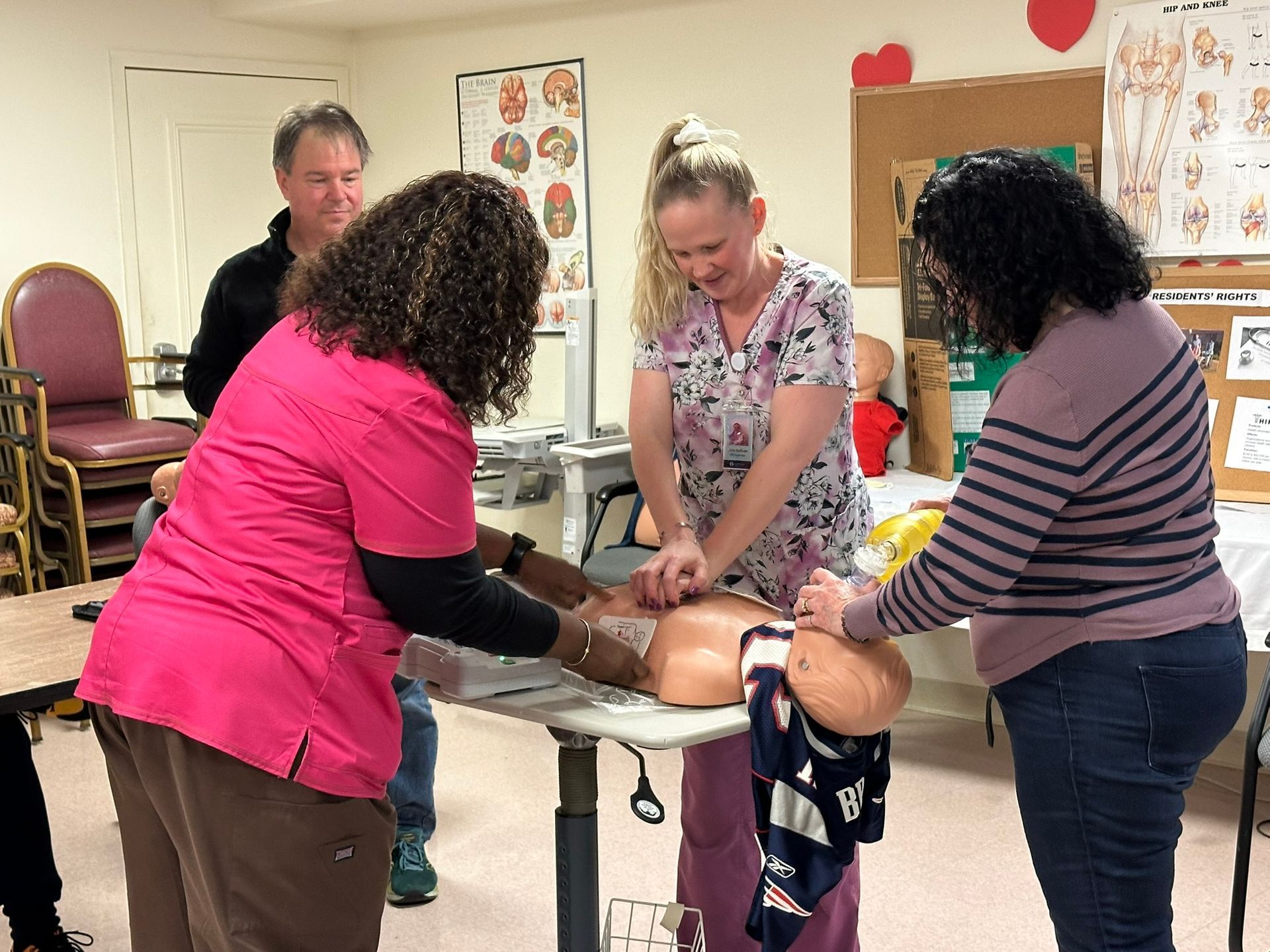
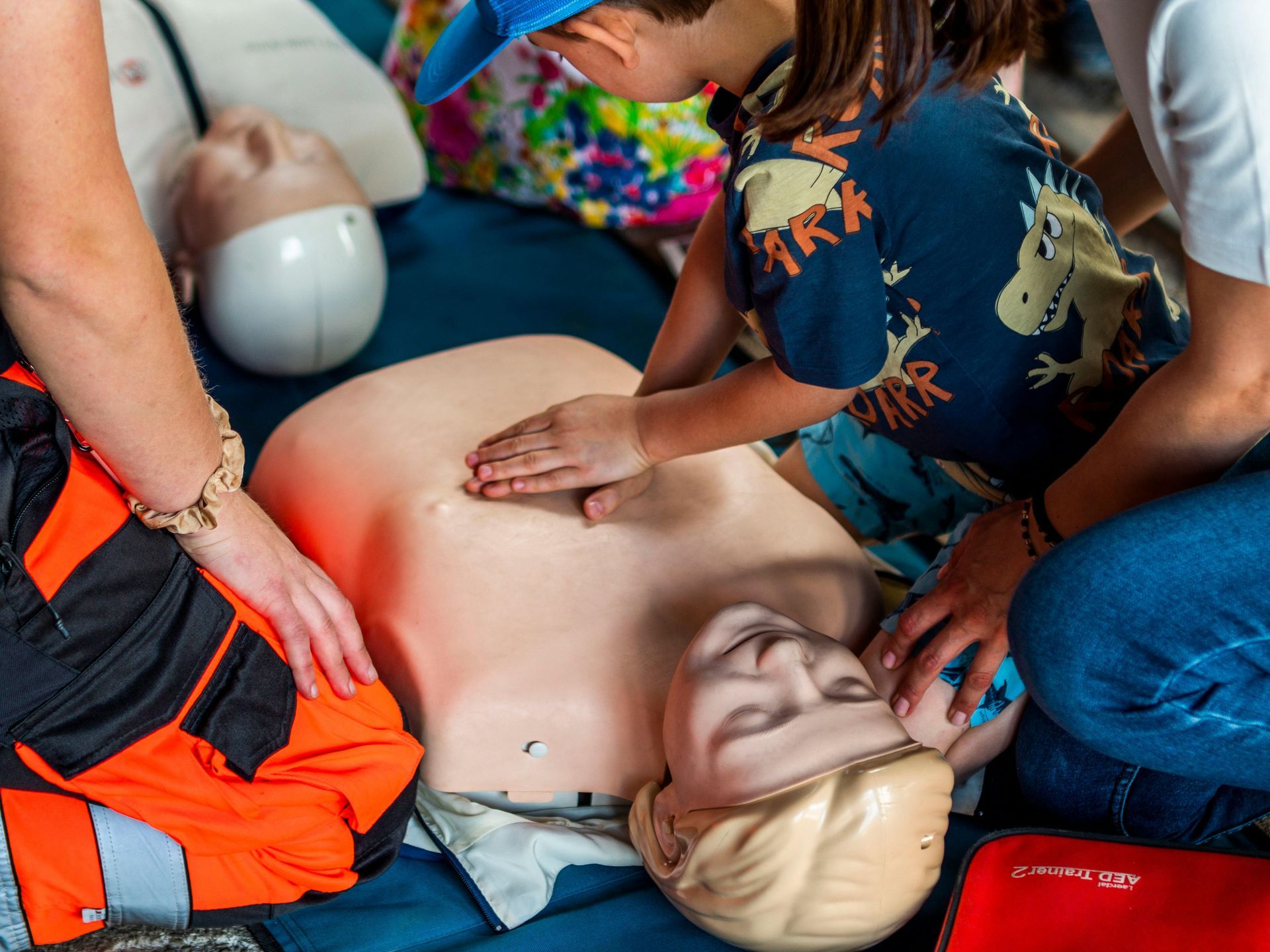
Reading about an AED is one thing. Actually seeing one, turning it on, placing training pads, and following the prompts is another.
That's why hands-on practice is valuable. At Inspire CPR, students have the opportunity to become familiar with AED equipment as part of appropriate CPR training. Practicing in a classroom environment can make the equipment feel much less intimidating if an emergency ever happens.
AED Training in Amesbury, MA
Inspire CPR provides American Heart Association training in Amesbury, including CPR and AED education.
We're located at:
Inspire CPR, LLC
Boston North Technology Park
110 Haverhill Rd, Building C
Amesbury, MA 01913
Our location is convenient for people searching for AED training in Amesbury, MA or CPR classes in Amesbury, MA, as well as students coming from Newburyport, Salisbury, Haverhill, Merrimac, Newbury, West Newbury, Rowley, and surrounding communities.
Sources
1. American Heart Association. CPR and First Aid Training Courses. https://cpr.heart.org/en/cpr-courses-and-kits