Thanksgiving Feasting: Can One Big Meal Put Stress on Your Heart?

Johnny Maravelis • November 25, 2026

Thanksgiving is a time for family, friends, football, and, of course, food.


There's turkey, stuffing, mashed potatoes, gravy, cranberry sauce, casseroles, rolls, pies, and enough leftovers to keep the refrigerator full for days.


For many families, Thanksgiving dinner is the biggest meal of the year. And while enjoying a holiday feast is part of the tradition, there's something worth remembering:

A very large meal can place temporary demands on your body, especially if you already have cardiovascular or metabolic health concerns.


That doesn't mean one Thanksgiving dinner will cause a heart attack. But it is a good opportunity to talk about portion sizes, blood pressure, blood sugar, and recognizing the signs of a cardiac emergency.


What Happens to Your Body When You Overeat?

After a large meal, your digestive system gets to work breaking down food and absorbing nutrients.

Blood flow to the digestive system increases, and your body works to process the meal. You may feel tired, bloated, uncomfortable, or unusually sluggish.


A particularly large meal can also lead to temporary changes in blood glucose and other metabolic responses.

For people with certain underlying health conditions, a large meal may be more challenging.

Some considerations include:


1. High-Sodium Foods and Blood Pressure

Thanksgiving favorites can be surprisingly high in sodium.

Think about the ingredients that go into a traditional meal:

  • Turkey brine and seasoning
  • Packaged stuffing mixes
  • Gravy
  • Canned vegetables
  • Processed meats
  • Prepared casseroles
  • Salted butter and sauces


Consuming too much sodium can contribute to elevated blood pressure, particularly in people who are salt-sensitive or already have hypertension.  People with heart failure may also need to follow specific sodium and fluid restrictions prescribed by their healthcare team.


2. Heavy Meals and Digestive Stress

A plate piled high with turkey, stuffing, mashed potatoes, gravy, and several side dishes can leave you feeling uncomfortable.

Large meals may cause indigestion, bloating, and reflux. These symptoms can sometimes resemble or overlap with symptoms people associate with a heart attack.


Don't automatically assume chest discomfort is just indigestion, especially if it is accompanied by shortness of breath, sweating, nausea, lightheadedness, or pain in the arm, back, neck, or jaw.

When in doubt, call 911.


3. Blood Sugar Spikes

Thanksgiving meals often combine several carbohydrate-rich foods.

Mashed potatoes, sweet potatoes with marshmallows, stuffing, dinner rolls, cranberry sauce, and desserts can add up quickly.


For people living with diabetes, eating more carbohydrates than planned can make blood glucose management more difficult.

If you have diabetes, follow your healthcare provider's guidance for meal planning, medication timing, and blood glucose monitoring during the holidays.


4. Alcohol and the Heart

Holiday celebrations may also include wine, beer, cocktails, or other alcoholic beverages.


Alcohol can affect blood pressure and heart rhythm. Heavy drinking is associated with an increased risk of certain cardiovascular problems, including irregular heart rhythms.


If you have a heart condition or take medication, ask your healthcare provider whether alcohol is appropriate for you.


Can Thanksgiving Dinner Trigger a Heart Attack?

Research has identified an association between major holidays and increased cardiac events in some populations. However, it would be misleading to say that one large Thanksgiving meal directly causes a heart attack.


Heart attacks occur when blood flow to part of the heart is blocked. Cardiac arrest is different: it occurs when the heart's electrical system malfunctions and the heart stops pumping blood effectively.


A heart attack can sometimes lead to cardiac arrest.


The important takeaway is to recognize warning signs and never dismiss concerning symptoms as simply the result of eating too much.


Enjoy Thanksgiving Without Overloading Your Plate

You don't need to skip Thanksgiving dinner or avoid your favorite family recipes.


A few simple strategies can help you enjoy the holiday while being more mindful of your health:


Start with a reasonable portion. You can always go back for more if you're still hungry.

Include vegetables. Make room for green beans, roasted vegetables, salads, or other vegetable dishes.

Be mindful of sodium. Watch the amount of salt in gravies, packaged ingredients, sauces, and prepared foods.

Choose carbohydrates thoughtfully. You don't necessarily need three different starches on the same plate.

Slow down. Eat at a comfortable pace and give yourself time to recognize when you're full.

Take a walk. A relaxed post-meal walk can be a nice way to spend time with family and get moving, as long as it is appropriate for your health and fitness level.

Stay hydrated. Water is a simple way to stay hydrated without adding extra sugar.

If you have heart disease, diabetes, or another medical condition, follow the dietary and activity recommendations provided by your healthcare team.


The Thanksgiving Emergency Nobody Wants to Experience

Now imagine this scenario.

Everyone has finished eating. The football game is on, the dishes are piling up, and someone heads into the living room.

Suddenly, a family member collapses.


Someone shouts their name, but they don't respond. They're not breathing normally.


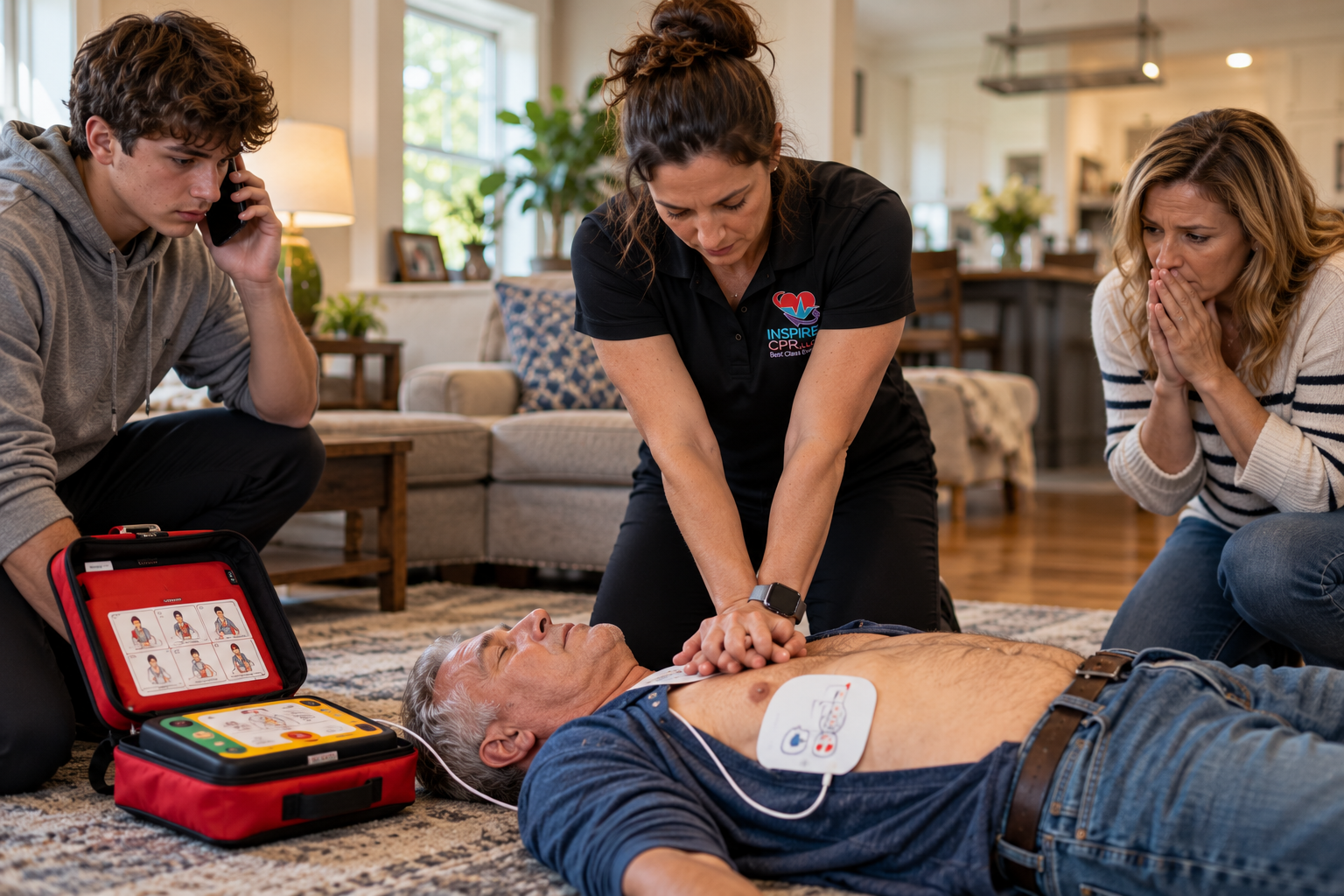
This isn't a food coma. It could be cardiac arrest.  Would anyone at the table know what to do?


What to Do If Someone Goes Into Cardiac Arrest During Thanksgiving

A cardiac arrest can happen anywhere, including your own dining room.

Here's how to respond if an adult suddenly collapses, becomes unresponsive, and is not breathing normally.


Step 1: Check for Responsiveness

Make sure the area is safe.

Tap the person's shoulders and shout, "Are you OK?"

If they don't respond, immediately call for help.


Step 2: Call 911

Tell someone specifically to call 911.

If others are present, ask another person to locate an AED.

Don't waste time waiting to see whether the person wakes up.


Step 3: Start Hands-Only CPR

For an adult who suddenly collapses outside a medical setting:

  • Place the heel of one hand in the center of the chest.
  • Put your other hand on top.
  • Push hard and fast.
  • Aim for 100–120 chest compressions per minute.
  • Allow the chest to return to its normal position after each compression.


Keep going until the person shows signs of life, emergency responders take over, or you cannot continue.

If you are trained in conventional CPR, follow your training and the 911 dispatcher's instructions.


Step 4: Use an AED

If an AED is available, turn it on immediately and follow its voice prompts.  The device will guide you through pad placement and analyze the heart rhythm to determine whether a shock is needed.  You do not have to be a doctor or healthcare professional to use an AED.


Step 5: Continue Until Help Arrives

Continue CPR and follow the AED instructions until emergency medical personnel take over or the person begins to show signs of life.

Remember: Early CPR and defibrillation can significantly improve the chances of surviving cardiac arrest.


Make CPR Training Part of Your Family's Holiday Preparation

Most families spend time planning the Thanksgiving menu, arranging travel, and making sure everyone has a place at the table.

But how many families talk about what to do if someone experiences a medical emergency?


Knowing CPR is one of the most important skills you can bring into your home.


Consider taking an American Heart Association CPR and AED course. Encourage family members, caregivers, and anyone who regularly hosts gatherings to learn how to respond.


This Thanksgiving, enjoy the food, appreciate your family, and remember that being prepared can make all the difference.


The most important thing on the Thanksgiving table isn't the turkey. It's having people around you who know how to help when every second counts.


At Inspire CPR, we provide hands-on American Heart Association CPR, AED, and First Aid training in Amesbury, MA.

Inspire CPR, LLC
110 Haverhill Rd, Building C
Amesbury, MA 01913


Serving Amesbury, Newburyport, Salisbury, Haverhill, Merrimac, Newbury, West Newbury, Rowley, and surrounding communities.

Sources

  1. American Heart Association – Treatment of Cardiac Arrest
  2. American Heart Association – Heart Attack Warning Signs
  3. American Heart Association – Diabetes and Your Diet
  4. American Heart Association – Diet and Lifestyle Recommendations
  5. CDC – About Cardiac Arrest


By Johnny Maravelis • November 23, 2026
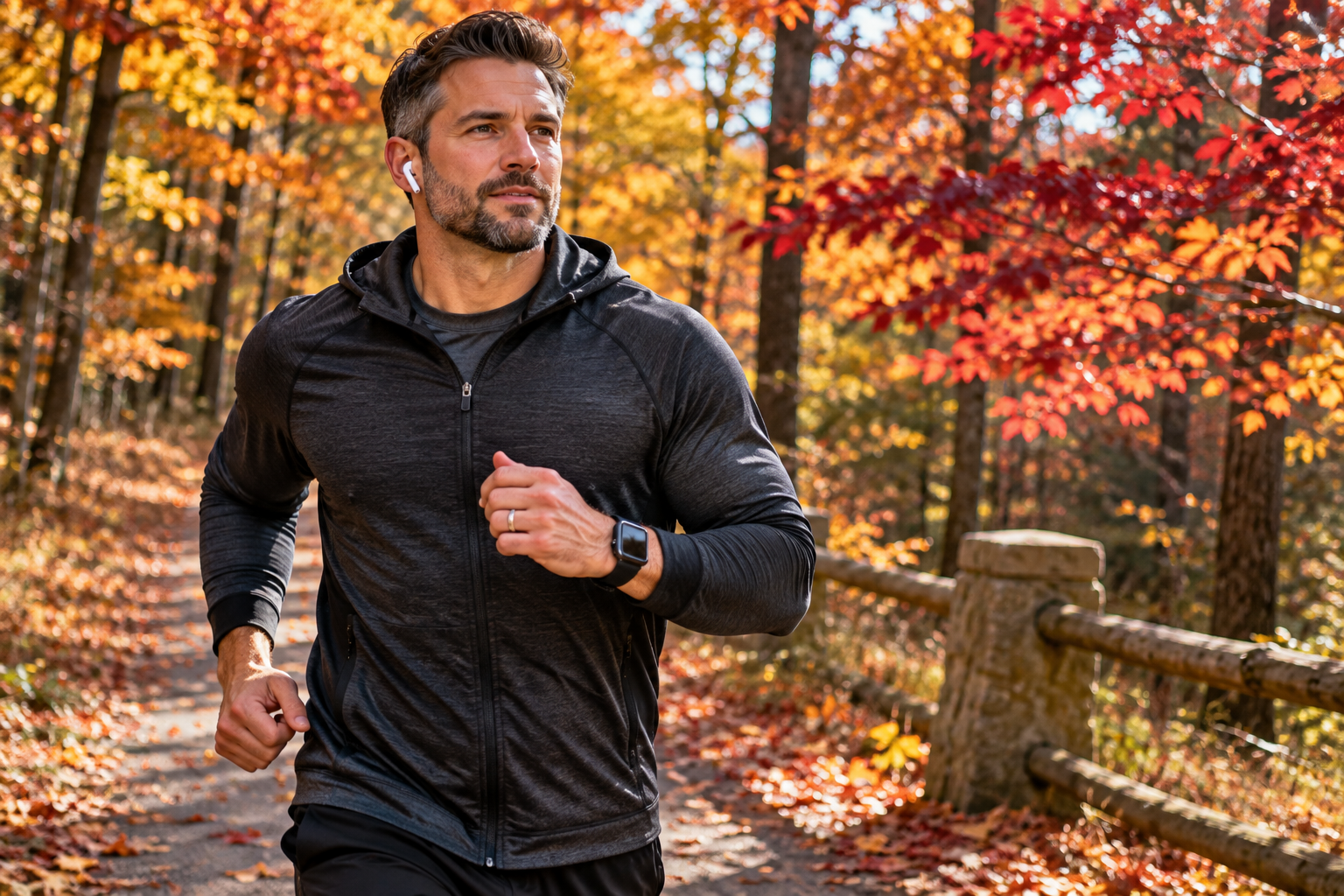
There is something special about getting outside for a run in the fall. The cooler temperatures, changing leaves, and crisp autumn air make it a great time to lace up your sneakers and get moving. Running is one of many activities that can help strengthen your cardiovascular system. Regular physical activity supports heart health, helps manage blood pressure, improves fitness, and can contribute to maintaining a healthy weight. But there is another side to fall fitness that every runner, walker, cyclist, and spectator should understand: What happens if someone suddenly collapses while exercising? Would you know what to do? Why Running Is Good for Your Heart Your heart is a muscle, and like other muscles, it benefits from regular exercise. Running challenges your cardiovascular system by increasing your heart rate and requiring your body to deliver more oxygen to working muscles. With consistent physical activity, you can improve cardiovascular fitness and support your overall health. Some potential benefits include: Improved cardiovascular endurance Better blood pressure management Improved blood sugar regulation Support for maintaining a healthy weight Reduced risk of cardiovascular disease over time Improved mood, energy, and overall well-being You don't have to run a marathon to benefit. Brisk walking, cycling, swimming, and other aerobic activities can also support heart health. The American Heart Association generally recommends at least 150 minutes of moderate-intensity aerobic activity or 75 minutes of vigorous activity each week for adults, along with muscle-strengthening activities. Can Running Cause Cardiac Arrest? Running itself is generally beneficial for heart health. However, strenuous exercise can sometimes trigger a cardiac event in someone with an underlying heart condition. Sudden cardiac arrest occurs when the heart's electrical system malfunctions, causing it to stop pumping blood effectively. It is different from a heart attack, although a heart attack can sometimes lead to cardiac arrest. Cardiac arrest can happen during exercise, even in people who appear physically fit. It is uncommon, but recognizing the warning signs and responding quickly can make a life-saving difference. Pay attention to symptoms such as: Chest pain, pressure, or discomfort Unusual shortness of breath Dizziness or lightheadedness Fainting or near-fainting Heart palpitations accompanied by weakness or discomfort Stop exercising and seek medical attention if you experience concerning symptoms. Call 911 for possible heart attack symptoms rather than trying to finish your workout. Someone Just Collapsed on the Running Trail. Now What? Imagine you're enjoying an autumn walk when you see a runner ahead of you suddenly collapse. At first, you might assume they tripped, became exhausted, or experienced dehydration. But if the person is unresponsive and isn't breathing normally, they could be experiencing sudden cardiac arrest. Don't assume someone is simply taking a break. Seconds matter. Here's what to do: 1. Check for Responsiveness Make sure the area is safe. Tap the person's shoulders and shout, "Are you OK?" If they don't respond, treat the situation as an emergency. 2. Call 911 Ask someone nearby to call 911 and report a possible cardiac arrest. If other people are present, give specific instructions: "YOU call 911!" "YOU find an AED!" Assigning specific people helps prevent everyone from assuming someone else has already called. 3. Start Hands-Only CPR If the person is unresponsive and not breathing normally, or is only gasping, begin CPR. For an adult: Place the heel of one hand in the center of the chest. Place your other hand on top and interlock your fingers. Push hard and fast. Aim for 100–120 compressions per minute. Allow the chest to return to its normal position between compressions. Don't stop unnecessarily. Continue until the person shows signs of life, emergency responders take over, or you cannot continue. 4. Use an AED as Soon as Possible An Automated External Defibrillator (AED) may be available at a nearby gym, school, recreation facility, business, or public building. Turn it on, follow the voice prompts, and attach the pads as directed. The device will analyze the heart rhythm and tell you whether a shock is advised.  You do not need to be a medical professional to use an AED. Follow its instructions and resume CPR when directed. Why CPR Training Matters for Runners and Everyone Else You might never witness a cardiac emergency while running. But you could encounter one at a local park, on a neighborhood sidewalk, at a race, or even in your own home. Knowing CPR and how to use an AED gives you the confidence to act instead of standing by wondering what to do. If you run with friends or participate in local races, consider making CPR and AED awareness part of your fitness community's safety plan. Keep Your Heart Healthy This Fall Enjoy the cooler weather, stay active, listen to your body, and make time for regular exercise. Your heart benefits from consistent movement, but being prepared for an emergency is just as important. At Inspire CPR, we offer American Heart Association CPR, AED, and First Aid training in Amesbury, MA. Whether you're a healthcare professional, fitness enthusiast, coach, business owner, or simply someone who wants to be prepared, learning CPR could help you save a life. Don't just get your heart pumping. Know how to help when someone else's heart stops. Inspire CPR, LLC 110 Haverhill Rd, Building C Amesbury, MA 01913 Serving Amesbury, Newburyport, Salisbury, Haverhill, Merrimac, Newbury, West Newbury, Rowley, and surrounding communities. Sources American Heart Association – The American Heart Association Diet and Lifestyle Recommendations American Heart Association – Treatment of Cardiac Arrest American Heart Association – What Is CPR? CDC – About Cardiac Arrest
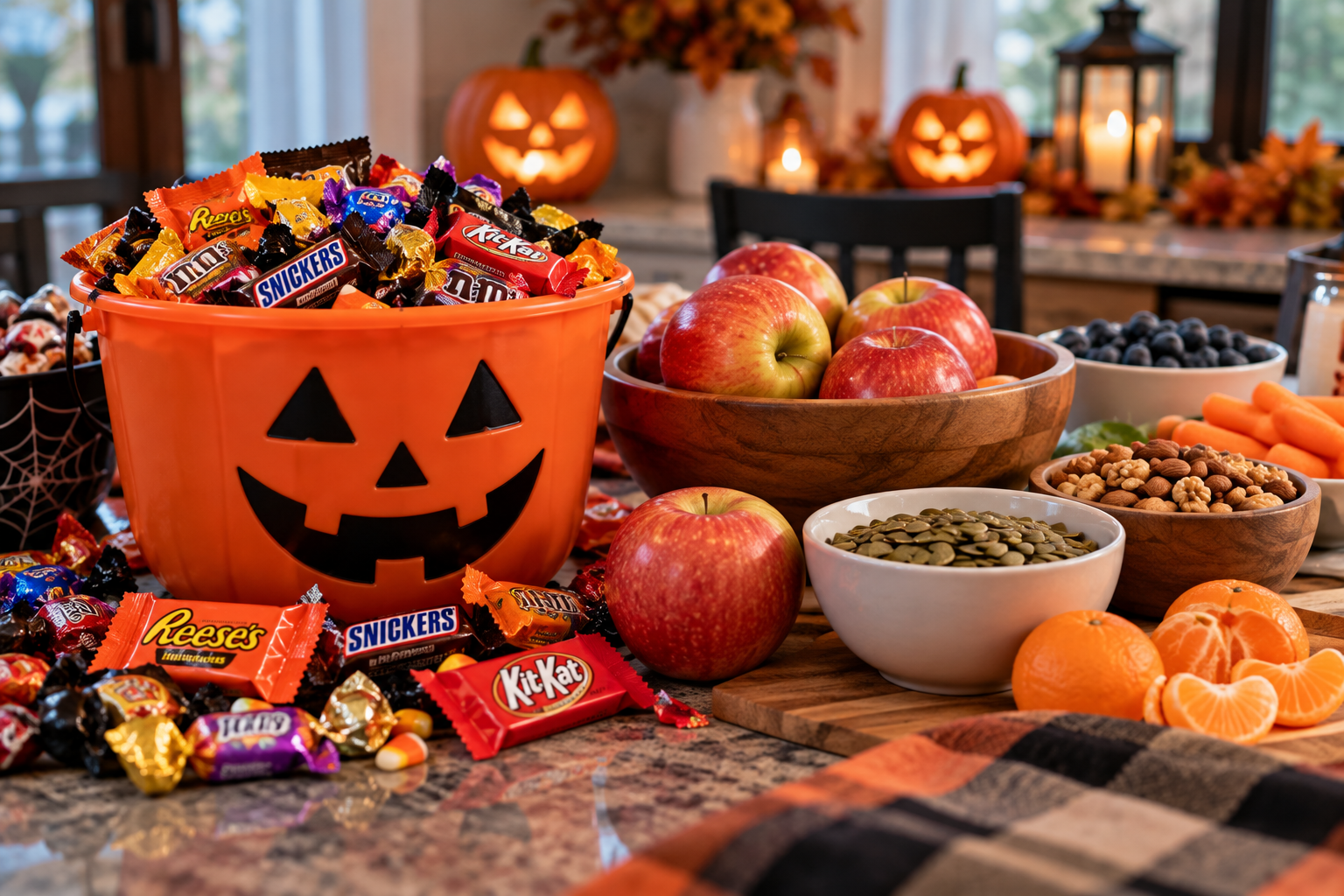
Halloween candy spills from an orange bucket beside a carved pumpkin and bowl of treats.
By Johnny Maravelis • November 2, 2026
What's in your favorite candy? Learn how added sugar, processed ingredients, diabetes, and dietary habits can affect long-term heart health.
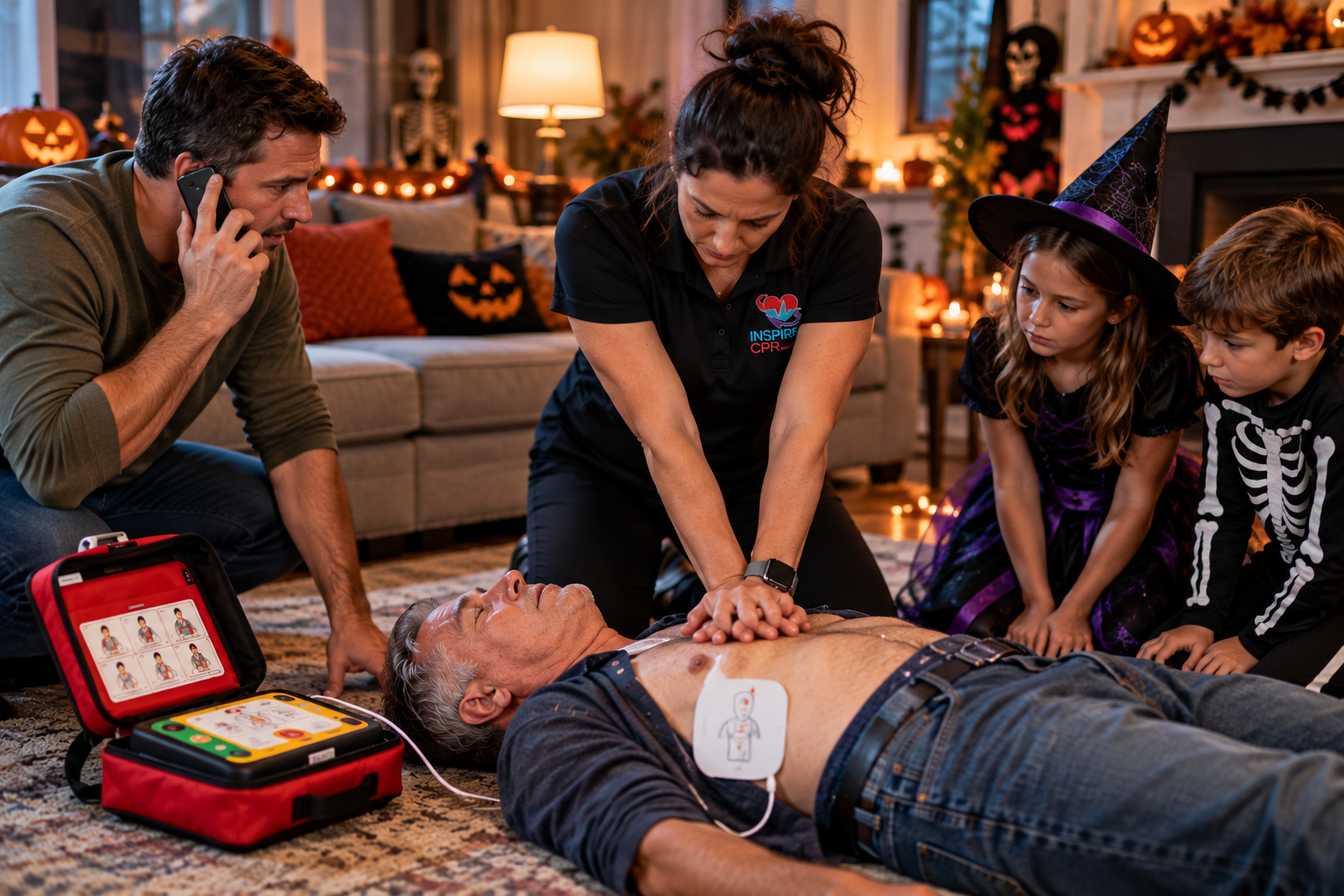
Adults and children practicing CPR on a man in a living room beside an open first-aid kit
By Johnny Maravelis • October 30, 2026
Would you know what to do during a cardiac emergency? Learn CPR and AED basics and find CPR classes in Amesbury, MA with Inspire CPR.
Halloween cocktail spread with glowing jack-o'-lantern, martinis, sangria, and appetizers at a festive party
By Johnny Maravelis • October 28, 2026
Can Halloween cocktails affect your heart? Learn about alcohol, irregular heart rhythms, blood pressure, safer party choices, and CPR preparedness.
Halloween snack table with jack-o'-lantern candy bucket, apples, nuts, and pumpkins
By Johnny Maravelis • October 28, 2026
Would you know what to do during a cardiac emergency? Learn CPR and AED basics and find CPR classes in Amesbury, MA with Inspire CPR.
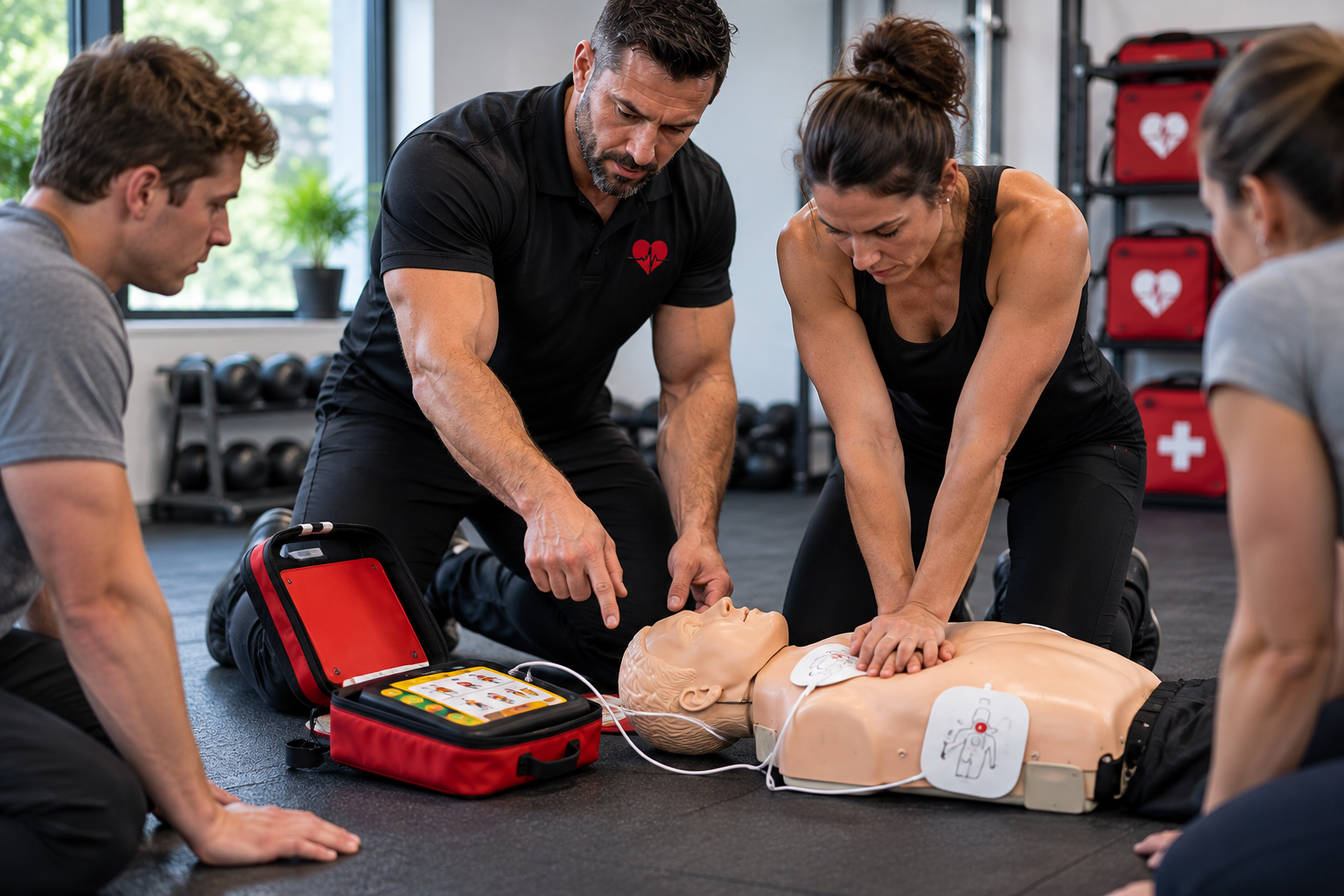
CPR training scene with two people assisting a man on the floor and an open AED kit nearby
By Johnny Maravelis • September 30, 2026
Would you know what to do if someone you love needed CPR? Learn why CPR training matters and find CPR classes in Amesbury, MA for families and communities.
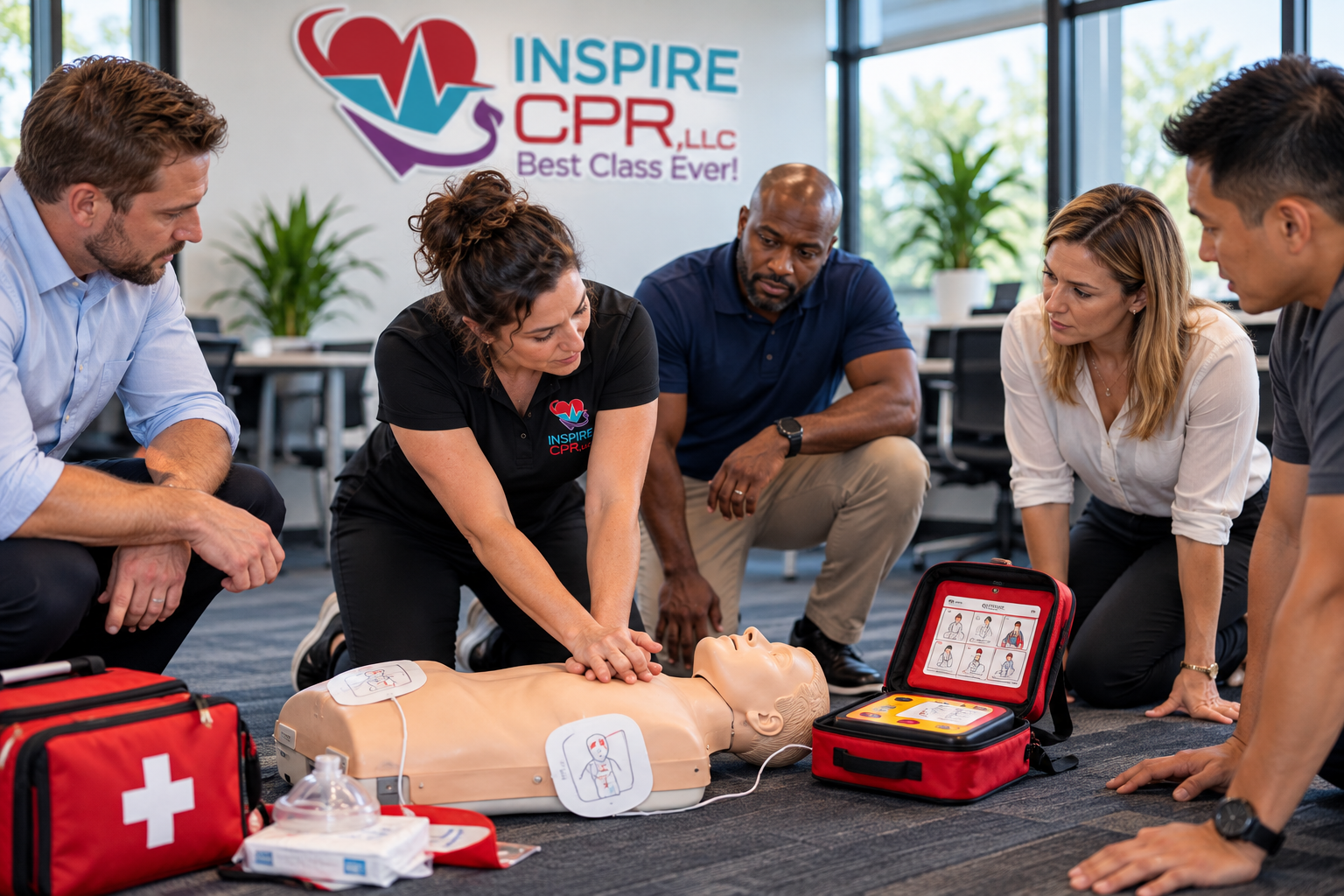
People practicing CPR on a training mannequin beside a first aid kit and AED trainer
By Johnny Maravelis • September 29, 2026
Learn why workplace CPR and First Aid training matters and how Inspire CPR helps businesses in Amesbury, MA prepare employees for emergencies.
By Johnny Maravelis • September 28, 2026
When someone suddenly collapses and is not responding normally, every second matters. You may have seen an Automated External Defibrillator, or AED, mounted on the wall at a gym, workplace, school, restaurant, airport, or community building. But would you know what to do if you actually needed to use one?
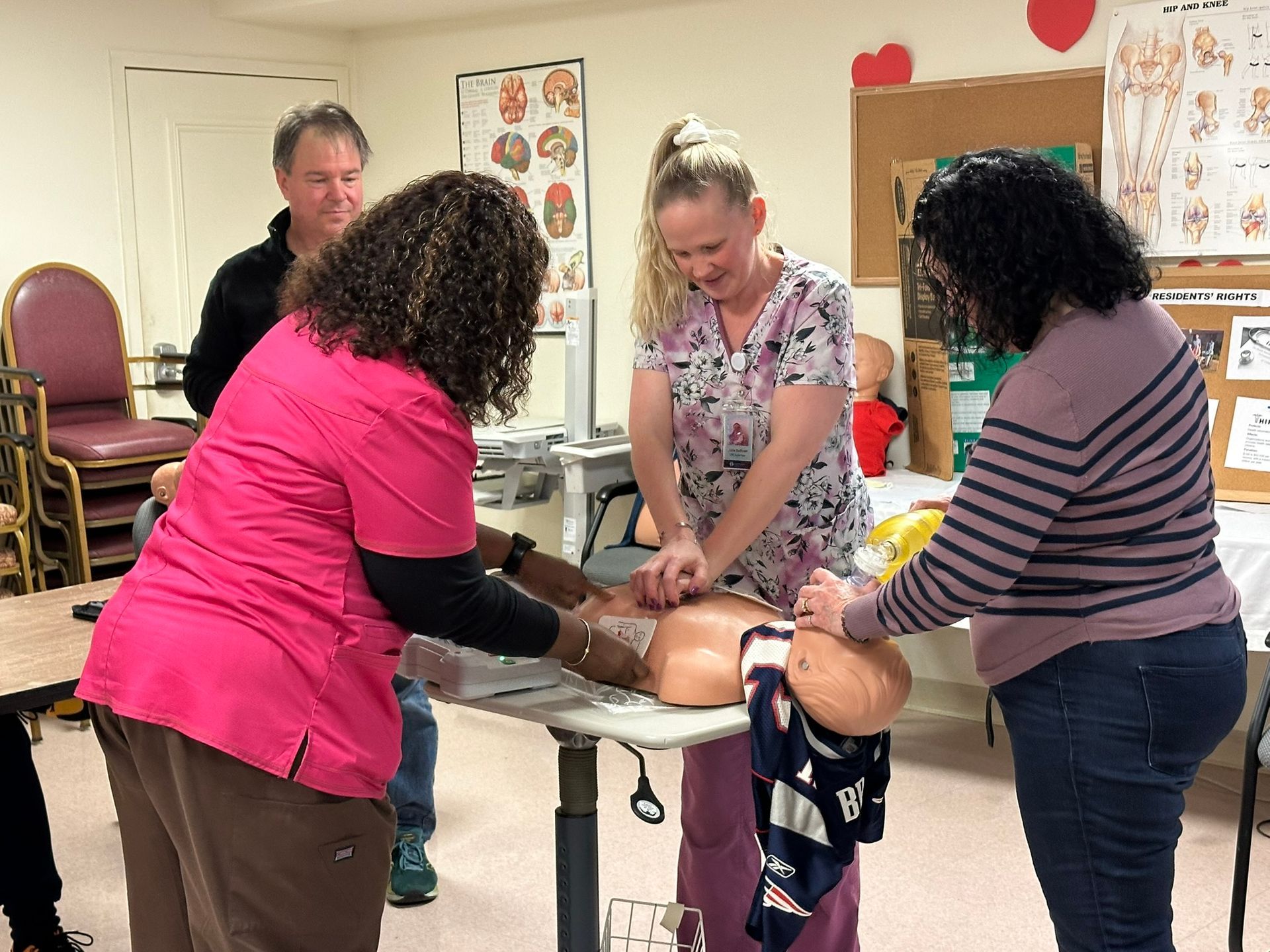
People practicing CPR on a mannequin in a classroom setting
By Johnny Maravelis • August 24, 2026
Not sure which CPR class you need? Learn the differences between AHA BLS, Heartsaver CPR, AED, First Aid, and pediatric courses at Inspire CPR.
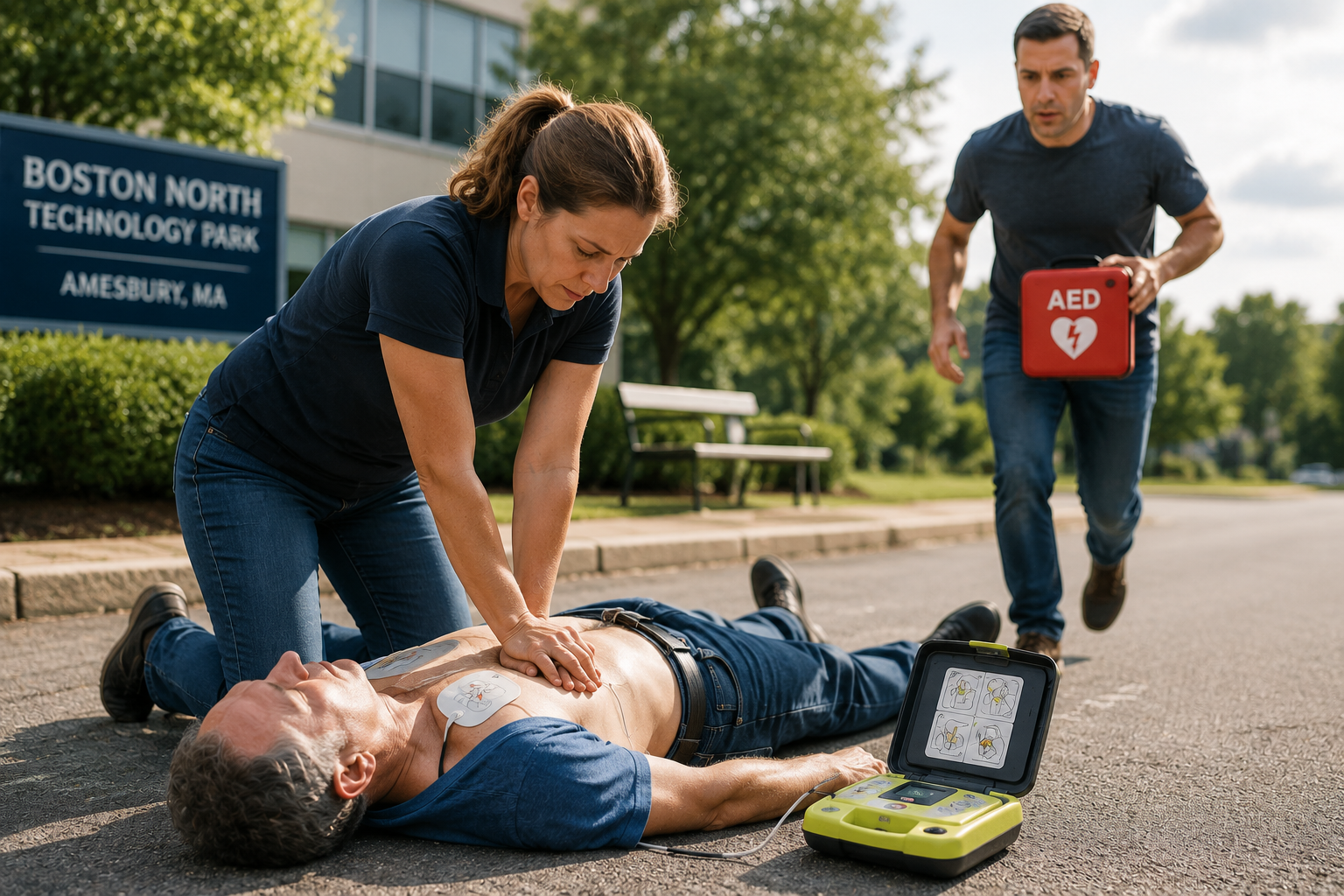
Man performing CPR on man beside AED at Boston North Technology Park while another man runs over with first aid kit
By Johnny Maravelis • August 20, 2026
Discover why CPR training matters in the Merrimack Valley and find CPR classes in Amesbury, MA for healthcare providers, businesses, families, and more.